

Chemical peels, like many effective skincare treatments, tend to work best as part of an ongoing plan rather than a one-time event.
Skin cells naturally cycle through renewal over several weeks, and a single peel only interrupts one cycle rather than reshaping the skin’s long-term behavior. Repeated treatments allow your dermatologist to work with this natural renewal process instead of trying to force results all at once.
Keep reading to learn why a series of peels often outperforms a single treatment, and how a consistent approach can help you achieve the healthy, radiant skin you are looking for.
What Is a Chemical Peel?
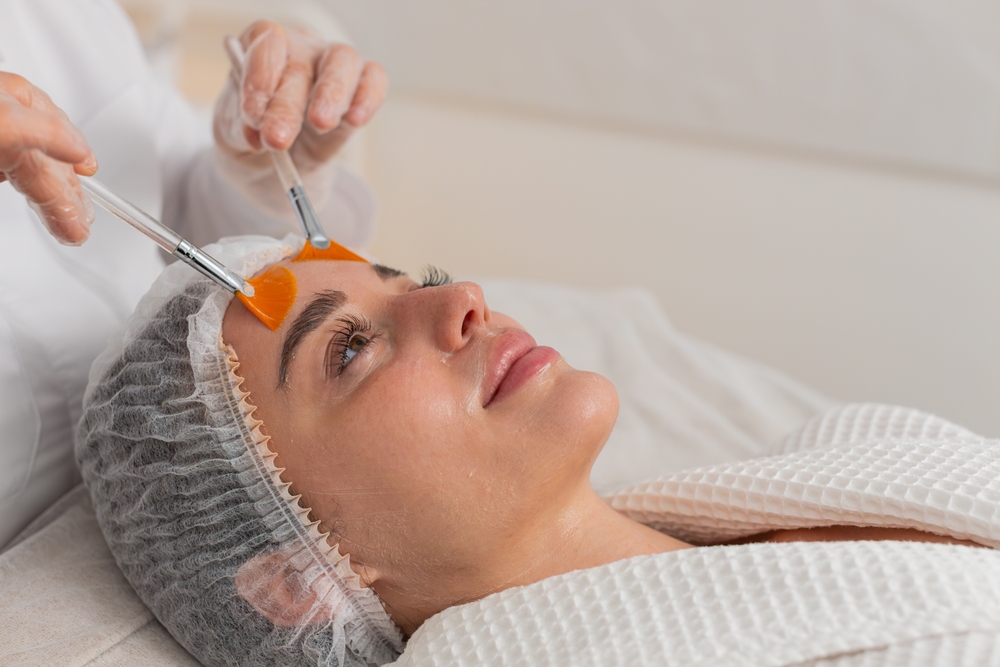
A chemical peel is a treatment that uses a specially formulated acid solution to remove damaged outer layers of skin. As the old layers shed, fresher, smoother skin is revealed underneath.
Peels are generally grouped into three categories based on depth: superficial, medium, and deep.
Superficial peels target only the outermost layer of skin, while medium and deep peels reach further into the skin to address more significant concerns, though they also require more downtime.
Your dermatologist can help determine which type and strength of peel is appropriate for your skin type and goals.
How Do Chemical Peels Work on the Skin?
Peels work through controlled exfoliation, gently loosening the bonds between dead skin cells so they shed more effectively. This process encourages your skin to generate fresh new cells at a faster rate than it would naturally.
Many peels also stimulate collagen production in the deeper layers of skin, which can improve firmness and texture over time. This combination of exfoliation and collagen stimulation is what gives peels their reputation for brightening and smoothing the complexion.
Why One Peel Often Isn’t Enough
Skin naturally goes through a turnover cycle, shedding old cells and replacing them with new ones over the course of several weeks. A single peel can jump start this process, but it cannot undo years of sun damage, uneven pigmentation, or textural concerns in one session.
Superficial and medium peels, which are the most commonly used for ongoing skincare maintenance, are designed to work cumulatively. Each treatment builds on the improvements made by the last one, gradually revealing clearer and more even skin.
Alyson Portera-Greene, LE, a licensed esthetician at Golden State Dermatology in Morgan Hill, explains why patience pays off with peel treatments:
“Patients are often surprised to learn that visible improvement from a single peel is usually modest, especially with the gentler formulations we use most often. The real transformation happens over a series of sessions, as we gradually increase the depth of exfoliation while monitoring how the skin responds. This measured approach allows us to achieve significant results with a much lower risk of irritation or complications than trying to accomplish everything in one aggressive treatment. I always tell my patients that consistency, not intensity, is what produces the best long-term outcomes.”

What Skin Concerns Benefit Most From a Series?

Certain skin concerns respond particularly well to a series of peels rather than a single application.
- Acne scarring and post-inflammatory hyperpigmentation often require multiple sessions to see meaningful fading and smoothing.
- Sun damage, uneven skin tone, and mild textural irregularities also tend to improve gradually with repeated treatments.
- Fine lines and dullness, which are often related to slower cell turnover, likewise respond best to the cumulative effects of ongoing peel sessions.
Your provider will help you understand how many sessions may be needed to reach your goals.
What Does a Typical Peel Series Look Like?
Most peel series involve treatments spaced two to four weeks apart, depending on the peel strength and your skin’s tolerance. This interval gives your skin enough time to fully recover and regenerate before the next session.
Your provider may start with a milder peel and gradually increase the strength as your skin adjusts. This step-by-step approach helps achieve noticeable improvement while reducing the likelihood of excessive redness, peeling, or sensitivity.
Lorena Cardenas, LE, a licensed esthetician at Golden State Dermatology in Carmel, shares insight into how a personalized series comes together:
“No two patients’ skin responds to peels in exactly the same way, which is why we always start conservatively and adjust from there. Some patients can tolerate a stronger formulation right away, while others need a gentler introduction before we increase intensity. By reassessing the skin at each visit, we can make sure the plan continues to match what the skin actually needs rather than following a rigid, one size fits all schedule.”

Building Healthier Skin One Peel at a Time
While a single chemical peel can offer a nice refresh, a series of treatments is what truly unlocks the full potential of this popular skincare option. By allowing your skin to heal, regenerate, and respond gradually, a peel series can deliver more even, longer-lasting improvements than any one session on its own.
If you have questions about your skin, schedule an appointment at Golden State Dermatology today!